The collection
Shopify themes for beauty & skincare brands
Fyzn builds Shopify themes for one kind of shop: beauty and skincare. That means the things a beauty storefront lives on — ingredient lists, routines, shade filtering, before-and-after evidence — are part of the theme rather than apps bolted onto a general-purpose template.
The collection
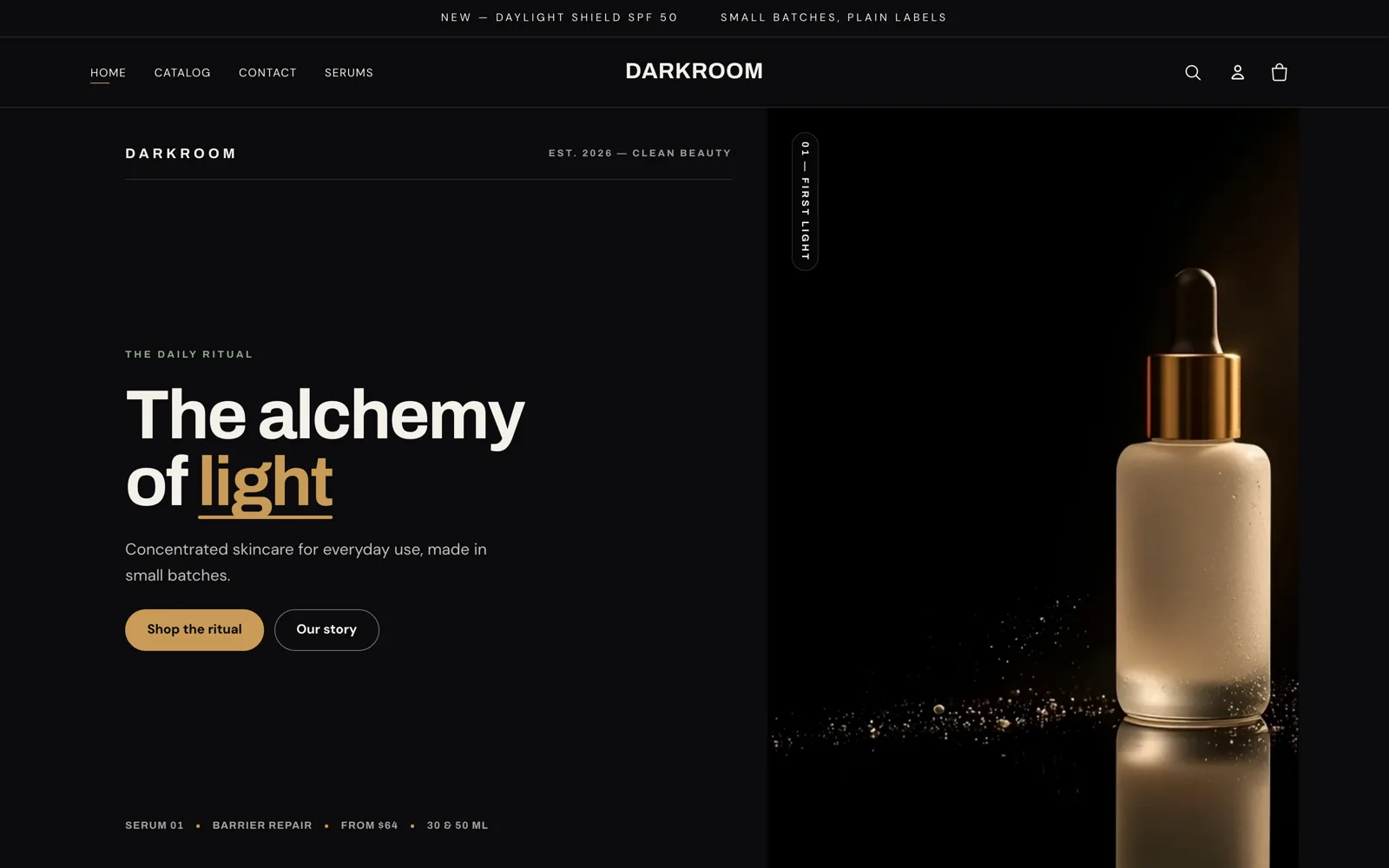
$350 USD · one-time, one store
A skincare storefront that reads like a magazine and behaves like a shop.
In Shopify Theme Store review
See Darkroom · Documentation
What a beauty storefront needs from its theme
Six things separate a theme that happens to look good on a serum from one built for selling it. They are the same six we had to build, and they are worth checking against whatever you are considering — including ours.
Ingredient and INCI display that a shopper can actually read
Skincare buyers check the ingredient list before the description — for allergens, pregnancy restrictions, actives they are avoiding. The list has to be selectable text on the product page, in the legally required order, driven by product data rather than pasted into a description. If your theme leaves you putting it in an image, every one of those shoppers is guessing.
Routines, not just products
Skincare sells in sequences: cleanse, treat, moisturise, protect. A theme that can only show one product at a time makes you rebuild that story in every description. Look for regimen or routine sections, complete-the-set merchandising, and a product page that can point at what comes next.
Filtering by skin type, concern and shade
Beauty catalogues are browsed by problem, not by category. A shopper arrives knowing they have sensitive skin or a specific shade, and a theme that only filters by collection and price makes them read every product to find out. Shade swatches and attribute filters are the difference between browsing and searching.
Evidence: before and after, and honest claims
Beauty is a category where the proof does the selling — but before-and-after presentation carries real advertising-standards weight, and it has to be handled carefully rather than as a decorative slider. A theme should give you the component and leave the claims to you.
Subscription and refill flows
Repeat purchase is where beauty margins live. Whether you use a subscription app or a refill SKU, the product page has to make the recurring option legible at the point of choice, not hidden in a dropdown after add-to-cart.
Speed you can put a number on
Every theme calls itself fast. Ask for the measurement: how much JavaScript the theme itself ships, on which page, and where largest contentful paint lands on a real store. A theme that will not tell you is telling you something.
What beauty brands are actually using
Four themes come up again and again in beauty catalogues. Here is what the Shopify Theme Store says about each of them, checked on 16 August 2026 — price, who builds it, and whether the listing advertises an ingredients block at all.
Sources: each theme’s own Shopify Theme Store listing, read 16 August 2026. Prices and features change; check the listing before you decide.| Theme | Price | Built by | Ingredients block listed |
|---|
| Refresh | Free | Shopify | Yes — “ingredients or nutritional information” |
|---|
| Sense | Free | Shopify | Yes — “ingredients or nutritional information” |
|---|
| Broadcast | $420 | Presidio | Not listed (product tabs, size chart) |
|---|
| Prestige | $400 | Maestrooo | Not listed |
|---|
| Darkroom | $350 | Fyzn | Yes — INCI ordering, actives, routines |
|---|
Two things that table will not tell you, and we would rather say so than imply otherwise.
A feature checkbox says nothing about depth. Refresh and Sense both advertise an ingredients block, and they are free — that is a real answer for a lot of brands, and we are not going to pretend it is not. What a listing cannot tell you is whether the block holds an INCI list in its legally required order, whether it separates actives with their concentrations, or whether it can flag an allergen. Open the demo and look at the product page before you take anyone’s word for it, including ours.
If you are specifically weighing up leaving Refresh, we went deeper on that one: Refresh theme alternatives for beauty brands.
We have not audited their implementations. Everything above comes from the public listings, not from building on all four. When we have done that work properly, this table gets deeper — until then it stays at the level we can actually stand behind.
Do you need a beauty-specific theme at all?
Not always, and it is worth being honest about when. If you sell three products, tell a simple story and do not need ingredient depth, a free Shopify theme will carry you further than most people expect — spend the money on photography instead.
A specialist theme starts paying when the catalogue grows past a handful of SKUs, when shoppers begin asking the same ingredient and suitability questions, or when you find yourself paying for three apps to do what the product page should have done. And when the storefront needs to do something no theme does, that is a custom build — a different conversation, and one we also have.
What is coming
Darkroom is the first. A colour-forward theme for makeup and cosmetics is next, and the collection grows from there. If you want to know when, or you have a question about whether Darkroom fits your catalogue, email us — a real person answers.